
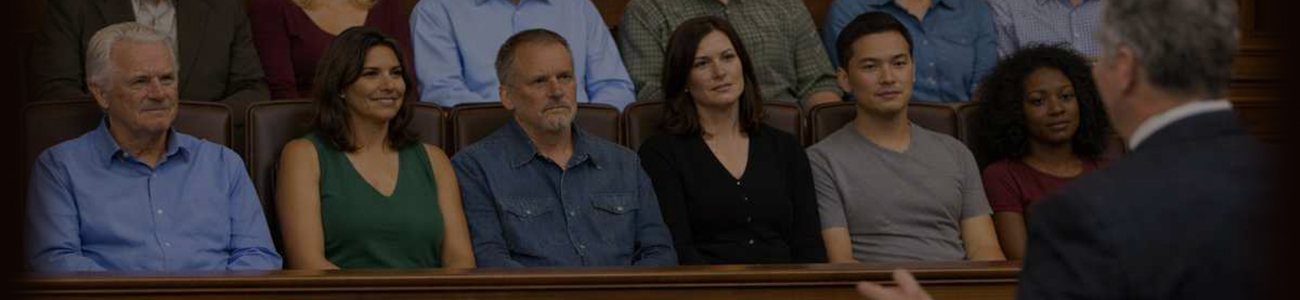
Readiness for Trial Is the Key to a Fair Settlement




Temporomandibular Joint (TMJ) Injuries in Georgia: What Accident Victims Should Know
See also our serious injury information center, and pages on neck injuries, back injuries, brain injury, spinal cord injury, burn injuries, femur fractures, ankle fractures, eye injuries, ear injuries, amputations, leg amputation, facial scar injuries, scalp avulsion injuries, hand fracture injuries, myofascial pain injuries, foot drop, asbestos and silica lung illness, and syringomyelia.
What Is a TMJ Injury?
A temporomandibular joint (TMJ) injury damages the hinge that connects your jaw to your skull. It can cause chronic pain, jaw locking, difficulty chewing, and clicking or popping sounds. TMJ trauma often results from car accidents, falls, or other mechanical impacts to the jaw or face.
The TMJ controls essential motions—speaking, eating, yawning—through an intricate hinge and sliding mechanism. Even slight displacement or inflammation can produce severe pain or limit jaw mobility. In Georgia, TMJ injuries are frequently seen after frontal-impact or airbag-deployment crashes where the lower jaw whips forward against restraint tension. For accident victims, persistent symptoms can overlap with mild traumatic brain injury presentation, leading to complex diagnostic disputes during litigation.
What Causes TMJ Injuries After a Georgia Accident?
Common causes of TMJ injuries include blunt facial trauma, whiplash-type forces, vehicle airbag deployment, or prolonged jaw clenching from stress or pain. Rear-end and frontal collisions often transmit kinetic energy through cervical muscles directly into the jaw joint capsule.
In automobile and trucking collisions across Metro Atlanta, plaintiffs frequently report TMJ dysfunction when facial trauma combines with cervical acceleration-deceleration. Insurance defense experts may argue preexisting bruxism (teeth grinding) or degenerative arthritis as causes. Effective plaintiff representation requires subpoenaing dental histories, prior X-rays, and comparing imaging intervals to establish trauma-induced pathology. In my Fulton County trials, treating oral surgeons often anchor causation testimony on contemporaneous CT or MRI evidence showing altered condylar positioning after impact.
What Are the Typical Symptoms of a TMJ Injury?
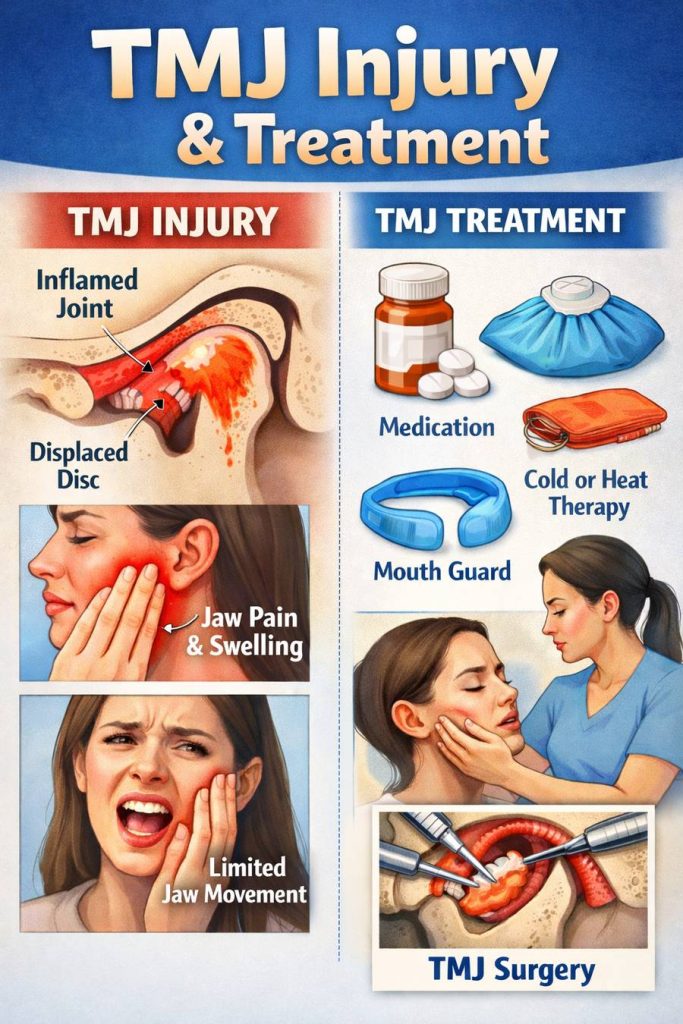
Symptoms include jaw pain or tenderness, difficulty chewing or speaking, popping or clicking when opening the mouth, and even earaches or dizziness. Severe cases may involve jaw locking where the mouth cannot fully open or close.
From a medical–legal standpoint, symptom duration is often the key differentiator between mild soft-tissue strain and permanent TMJ dysfunction. Plaintiffs may experience fluctuating pain patterns or restricted range of motion measurable by interincisal opening tests. I have seen juries respond strongly to demonstrative medical exhibits showing restricted movement or auditory clicking during recorded examinations. In Georgia venues like Cobb or Gwinnett County, physician testimony supported by 3D imaging carries substantial evidentiary weight.
F.A.Q. — How Are TMJ Injuries Treated Medically?
Treatment may include jaw rest, heat or cold therapy, anti-inflammatory medication, muscle relaxants, bite guards, or physical therapy. Severe cases may need arthrocentesis or total joint replacement.
For litigation purposes, distinguishing conservative versus surgical management impacts damage valuation. Non-surgical approaches—jaw rest, bite splints, soft diets—are typically first-line and may extend six months or more. Medical expenses climb if long-term physical therapy or injectable pain management is required. Major surgical interventions, such as joint arthroplasty, dramatically alter life-care cost projections—often forming the foundation of economic damages calculations under Georgia Pattern Jury Instructions 66.200 for medical expenses and pain and suffering.
Can I File a Personal Injury Claim for a TMJ Injury in Georgia?
Yes. If your TMJ injury was caused by another driver’s negligence or a defective product, you may have a compensable claim under Georgia tort law. You must prove proximate cause and actual injury through credible medical documentation.
Success in TMJ litigation depends on bridging the causation gap between trauma mechanics and functional impairment. Defense insurers often minimize TMJ claims as “soft tissue.” Effective advocacy in Georgia requires correlating impact dynamics (e.g., chin–steering wheel contact or seat belt shoulder compression) with later-developing temporomandibular symptoms. A skilled attorney assembles medical experts—oral surgeons, radiologists, and pain specialists—to establish causality and permanency. In one DeKalb County mediation, carefully staged CT imaging and dental occlusal analysis were key to overcoming a low initial offer and achieving a six-figure settlement.
What Should You Do After a Suspected TMJ Injury?
Seek immediate evaluation from a dentist, oral surgeon, or maxillofacial specialist. Document all symptoms, follow medical advice, and contact an experienced Georgia personal injury attorney familiar with head and neck trauma claims.
Early imaging and contemporaneous medical notes often determine whether a claim survives defense scrutiny. Plaintiffs should keep detailed journals tracking pain, diet limitations, and missed work. Attorneys frequently use such records to illustrate functional losses under O.C.G.A. §51‑12‑12 governing intangible damages. Insurance adjusters typically undervalue TMJ claims until faced with consistent documentation and treating physician testimony about permanent restriction or chronic pain.
Johnson & Ward, established in 1949, was Atlanta’s first personal injury specialty law firm. Call today at (404)253-7862 to schedule a free consultation. We handle car and truck accidents, falls, and serious injury claims, and we only get paid if we win.
Ken Shigley, senior counsel, former president of the State Bar of Georgia, was the first Georgia lawyer to earn three board certifications from the National Board of Trial Advocacy: Truck Accident Law, Civil Trial Practice, and Civil Pretrial Practice. He was the lead author of eleven editions of Georgia Law of Torts: Trial Preparation and Practice, and received the Traditions of Excellence Award from the State Bar of Georgia General Practice and Trial Section. B.A., Furman University; J.D., Emory University Law School; Certificates in mediation and negotiation, Harvard Law School. “Best Lawyers in America” (2024); Tradition of Excellence Award for Lifetime Achievement (2019); Board of Regents, Academy of Truck Accident Attorneys (2015-21); Diplomate, National College of Advocacy (2017); National Board of Trial Advocacy, Board Certification in Truck Accident Law (2019); National Board of Trial Advocacy, Board Certification in Civil Pretrial Advocacy (2012); National Board of Trial Advocacy, Board Certification in Civil Trial Advocacy (1995); Chair, American Association for Justice (AAJ) Motor Vehicle Collision, Highway & Premises Liability Section (2015-16)( included over 2,500 trial lawyers in all 50 states and specialized litigation groups on Trucking Litigation, Bus Litigation, Traumatic Brain Injury, Spinal Cord Injury, Motorcycle Litigation, Bicycle Litigation, Resort Torts Litigation and Inadequate Security Litigation); Criminal Justice Reform Council, appointed by Governor Nathan Deal (2011-13); Commission on Continuing Lawyer Competency (2012-13); Chief Justice’s Commission on Professionalism (2011-12); Georgia Commission on Dispute Resolution (2011-12); Georgia Courts Automation Commission (2008-10); Judicial Council of Georgia Standing Committee on Technology(2015-20); National Conference of Bar Presidents (2010-13); Southern Conference of Bar Presidents (2010-13); Chair, State Bar of Georgia Insurance Law Section (1994-95); Chair, Georgia Insurance Law Institute (1994); Peer ratings: “AV” in Martindale-Hubbell, Bar Register of Preeminent Lawyers (since 1995), “Super Lawyers,” “Legal Elite” (Georgia Trend), Avvo 10.0, “Who’s Who in Law” listing in Atlanta Business Chronicle; Chapter author – Handling Motor Vehicle Accident Cases (Thompson Reuters West)
John Adkins, managing partner, experienced in personal injury law, including auto accidents, truck accidents, wrongful death, workers’ compensation, premises liability claims, dangerous or defective products, medical malpractice, and related Plaintiff’s tort litigation. B.A., magna cum laude, Kennesaw State University; J.D., Thomas Jefferson Law School.
Ed Stone, partner, personal injury law, including truck accidents, auto accidents, wrongful death, workers’ compensation, premises liability claims, dangerous or defective products, medical malpractice, and related Plaintiff’s tort litigation. B.B.A., Kennesaw State University; J.D., John Marshall Law School.