

Readiness for Trial Is the Key to a Fair Settlement









Log Truck Accidents in Georgia
What makes log trucks uniquely dangerous on Georgia roads?
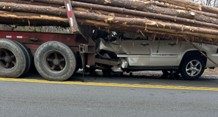
Log trucks carry heavy, shifting, irregular loads (often with high center of gravity). When braking or turning, logs can roll, “walk,” or spill if loading/securement is imperfect. Because the payload is dense, crashes tend to cause severe intrusion and catastrophic injury even at lower speeds. See our full Truck Accidents guide.
See also our truck accident information center and information on concrete mixer truck accidents, dump truck accidents, tire and wheel off truck accidents, truck accidents in bad weather, and reasons to file a truck accident case in Georgia.
Why is there inadequate insurance on Georgia log trucks?
Georgia law requires only $100,000 liability insurance for 18-wheeler log trucks with tree-length timber that operate only within Georgia’s state lines. That is set by the legislature, in which the forest products industry has a strong lobby. Just a few years ago, only $25,000 liability coverage was required, so even the inadequate coverage today is a step up. This is grossly inadequate for catastrophic injury and wrongful death cases. With decades of experience, we have found ways to multiply the amount of available insurance. In a recent case, we got it up to $1.6 million, still not enough for a death, but better than the paltry insurance on the log truck.
How does visual confusion of overlength loads contribute to Georgia log truck accidents?
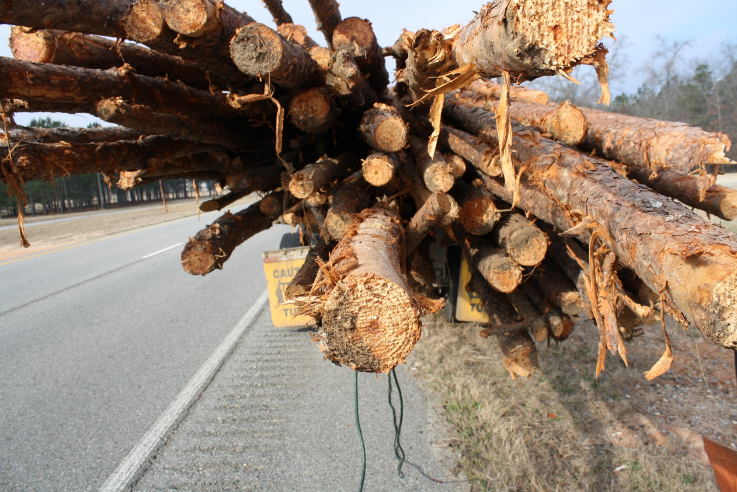
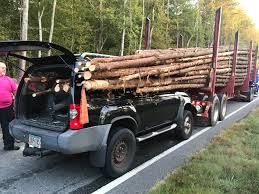
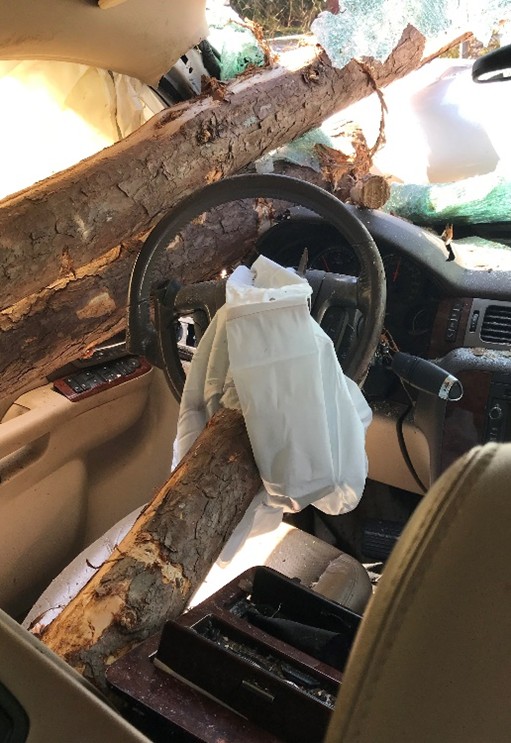
Drivers approaching an overlength log load from the rear encounter significant visual confusion as the load extends far beyond the end of the trailer. Often, the end of a load of logs bounces around, almost dragging on the pavement and obscuring the taillights of the trailer. The fancy word for this poot visibility is “conspicuity.” This is especially dangerous in twilight or dark, too often causing impalement or beheading of an innocent person in a following vehicle. We have had numerous cases where a load of logs extending twenty feet or more behind a trailer impaled the vehicle of an innocent driver.
How do load swings on turns contribute to Georgia log truck accidents?
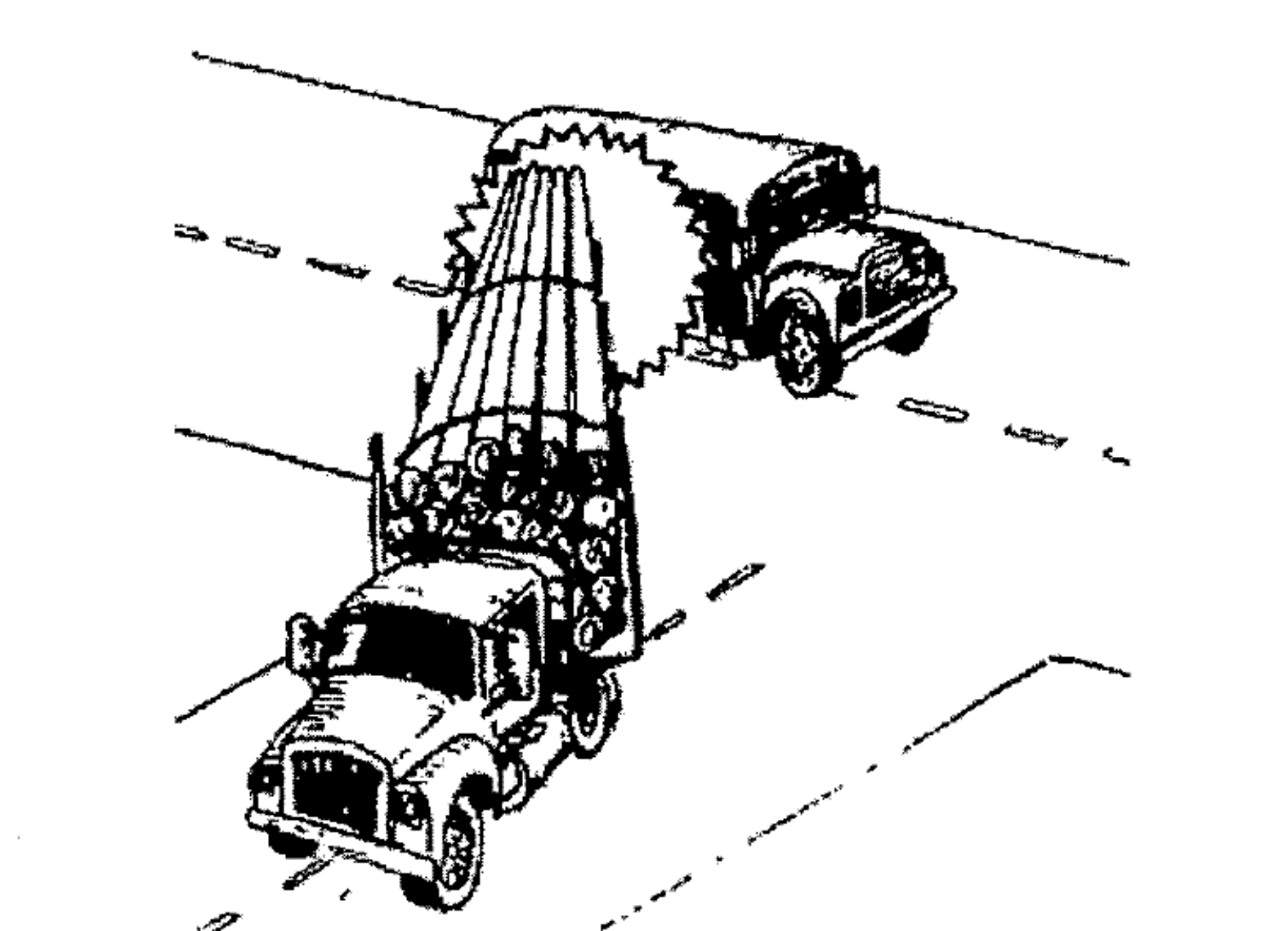
Another hazard is when an extended load of logs swings out in a turn. A variation of this is when a log truck driver, in predawn darkness, attempts a U-turn on a divided four-lane highway. The extended load of logs then forms a black fence across a traffic lane in the dark. The grisly results of such accidents are all too predictable.
Why are Georgia log trucking safety rules inadequate?
Log trucks operating solely within the state lines of Georgia are subject to the Georgia Forest Products Trucking Rules, not the stricter Federal Motor Carrier Safety Rules. These state rules were written by representatives of the logging industry to avoid citations and fines for most unsafe practices. There is no specific rule on one of the greatest hazards, tree-length logs hanging twenty feet or more off the end of a trailer on highways. However, there are ways to layer the federal rules and other industry materials with expert testimony from retired loggers to support a safety standard that is more reasonable than the minimal, lax state regulations.
F.A.Q. Is there often weak enforcement of Georgia’s weak log truck safety rules?
Georgia law requires that both a red flag and a red light on the extreme end of the load must be plainly visible from 500 feet to the rear and sides. While some sort of light is usually hung at the end of the load, it is rarely visible beyond about 50 feet behind the truck on the highway. Often, when following log trucks, you may see the required light is weak, flickering, and poorly maintained, with a loose bulb or poor wiring. The red flags are often extremely dirty, stained, and barely visible. The same is true about side reflectors, which are required on log trailers to make them visible to drivers approaching from the side at night. The reflectors are often thickly covered with mud, damaged, or missing. With few trucking safety enforcement officers spread thin across the state, enforcement is rare.
Is there adequate training of Georgia log truck drivers?
Most log truck drivers in Georgia are likable country boys. But because of low qualifications and low pay, they are often the least trained and qualified truck drivers on the road. Log truck drivers can be 18 rather than 21, and with only a brief Commercial Driver’s License training course that covers nothing about the unique hazards of log trucks. The basic Commercial Driver’s License training does not cover extended-length logs or the need to cut logs shorter for safety.
Is there unconscious bias among rural law enforcement officers in favor of log truck operators?
Nearly all log truck operators, drivers, and crashes are in rural countie s where the forest products industry is a major part of the local economy. Everyone in the county – including law enforcement officers and potential jurors— grows accustomed to seeing objectively unsafe practices in log truck operations, so they think hazardous conditions are normal. Law enforcement officers and potential jurors in those counties are likely to have friends and relatives who are timber producers and haulers. It is only human to sympathize with the log truck operators.
Are law enforcement officers responding to log truck crashes in Georgia adequately trained to investigate these accidents?
Even if they are not biased in favor of log truck operators because a friend or relative is one, the rural deputy sheriffs who most often respond to log truck crashes have not been trained on the inadequate Forest Products Trucking Rules. Most don’t know that a light in the rear of the load must be clearly visible from 500 feet. They don’t know how many reflectors must be clearly visible on a trailer’s side. Most don’t know to ask who loaded the trailer or where they are hauling the logs to. Because they are not trained in this, they do not notice and preserve critical evidence at the scene.
Why are most Georgia log truck accident cases in unfavorable venues?
Lawsuits must be filed in the county where a defendant resides. Logging operators almost always reside in rural counties where the forest products industry is dominant. Most jurors in those counties have friends and relatives who work in that industry, so they are accustomed to seeing unsafely loaded log trucks every day. Their sympathies often naturally lie with the log truck operator. However, there may be ways to secure venue in counties where judges and jurors can view unsafe log truck operations with fresh eyes.
Who other than the trucker can be legally responsible in a Georgia log truck crash?
Other potential defendants in log-truck cases include:
- The timber vendor that cut, loaded and secured logs on a trailer in the woods.
- Maintenance vendors (brakes, tires, lighting)
- Trailer/securement component manufacturers (stakes, binders, bolsters) in appropriate defect cases
- The mill to which timber was being hauled if it failed to enforce safety standards.
- Liability often turns on who controlled loading/securement and what contracts/policies required.
What insurance may be available after a log truck accident?
Potential coverage sources include:
- Log truck liability insurance (usually minimum of $100,000, more if required by party to which logs are transported)
- Timber vendor that cuts timber and loads logs on trailer. Amounts vary.
- Owner-operator policies (if leased equipment/driver)
- If logs are being hauled out of state, such as to a paper mills across the state line, a minimum of $750,000 insurance is required.
- Victim’s Uninsured / Underinsured Motorist insurance coverage
What evidence should be preserved immediately in a Georgia log truck case?
If possible, preserve/request:
- Photos of the accident and all angles of the vehicles
- ELD/telematics (speed, braking, hours, route) These are seldom present on old, ragged log trucks.
- Driver inspection reports
- Maintenance/repair history
- Scale tickets, bills of lading, timber tract origin docs
- Permit records (if any), route planning, bridge restrictions
- Post-crash inspection reports, photos of stakes/bunks/chains/binders
- Dashcam/surveillance (rare on log trucks)
- 911 records
- Witness statements
- Cell phones
These items can disappear fast—especially load securement components that get repaired/replaced.
Johnson & Ward, established in 1949, was Atlanta’s first personal injury specialty law firm. Call today at (404)253-7862 to schedule a free consultation. We handle car and truck accidents, falls, and serious injury claims, and we only get paid if we win.
Ken Shigley, senior counsel, former president of the State Bar of Georgia, was the first Georgia lawyer to earn three board certifications from the National Board of Trial Advocacy: Truck Accident Law, Civil Trial Practice, and Civil Pretrial Practice. He was the lead author of eleven editions of Georgia Law of Torts: Trial Preparation and Practice, and received the Traditions of Excellence Award from the State Bar of Georgia General Practice and Trial Section. B.A., Furman University; J.D., Emory University Law School; Certificates in mediation and negotiation, Harvard Law School. “Best Lawyers in America” (2024); Tradition of Excellence Award for Lifetime Achievement (2019); Board of Regents, Academy of Truck Accident Attorneys (2015-21); Diplomate, National College of Advocacy (2017); National Board of Trial Advocacy, Board Certification in Truck Accident Law (2019); National Board of Trial Advocacy, Board Certification in Civil Pretrial Advocacy (2012); National Board of Trial Advocacy, Board Certification in Civil Trial Advocacy (1995); Chair, American Association for Justice (AAJ) Motor Vehicle Collision, Highway & Premises Liability Section (2015-16)( included over 2,500 trial lawyers in all 50 states and specialized litigation groups on Trucking Litigation, Bus Litigation, Traumatic Brain Injury, Spinal Cord Injury, Motorcycle Litigation, Bicycle Litigation, Resort Torts Litigation and Inadequate Security Litigation); Criminal Justice Reform Council, appointed by Governor Nathan Deal (2011-13); Commission on Continuing Lawyer Competency (2012-13); Chief Justice’s Commission on Professionalism (2011-12); Georgia Commission on Dispute Resolution (2011-12); Georgia Courts Automation Commission (2008-10); Judicial Council of Georgia Standing Committee on Technology(2015-20); National Conference of Bar Presidents (2010-13); Southern Conference of Bar Presidents (2010-13); Chair, State Bar of Georgia Insurance Law Section (1994-95); Chair, Georgia Insurance Law Institute (1994); Peer ratings: “AV” in Martindale-Hubbell, Bar Register of Preeminent Lawyers (since 1995), “Super Lawyers,” “Legal Elite” (Georgia Trend), Avvo 10.0, “Who’s Who in Law” listing in Atlanta Business Chronicle; Chapter author – Handling Motor Vehicle Accident Cases (Thompson Reuters West)
John Adkins, managing partner, experienced in personal injury law, including auto accidents, truck accidents, wrongful death, workers’ compensation, premises liability claims, dangerous or defective products, medical malpractice and related Plaintiff’s tort litigation. B.A., magna cum laude, Kennesaw State University; J.D., Thomas Jefferson Law School.
Ed Stone, partner, personal injury law, including truck accidents, auto accidents, wrongful death, workers’ compensation, premises liability claims, dangerous or defective products, medical malpractice, and related Plaintiff’s tort litigation. B.B.A., Kennesaw State University; J.D., John Marshall Law School.