

Readiness for Trial Is the Key to a Fair Settlement





Dump truck accidents in Georgia
What makes dump truck accident cases different from other truck crashes?
Dump truck cases are different because the truck itself is often only part of the story. In many Georgia wrecks, the dump truck is working inside a larger construction or hauling operation, so there may be multiple companies involved—driver, trucking company, site contractor, paving company, quarry, loader operator, maintenance vendor, and sometimes a city or county. That matters because liability and insurance may be spread across several parties. Also see our Truck Accident information page.
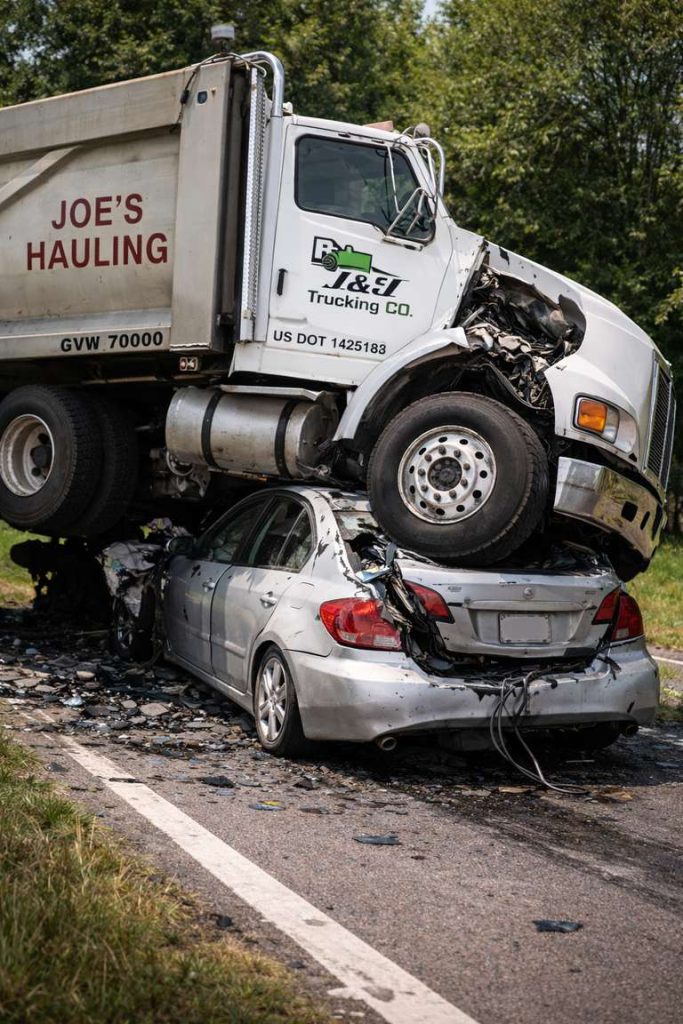
Where do dump truck accidents commonly happen in Georgia?
Dump truck crashes often happen in:
- Road construction zones
- Highway widening projects
- Residential and commercial job sites
- Quarry and aggregate routes
- Asphalt plants and concrete batch plant routes
- Suburban roads with heavy development traffic
Construction settings increase risk because there are workers on foot, changing traffic patterns, uneven surfaces, and frequent backing movements. NIOSH specifically warns that dump trucks create serious struck-by, tip-over, crushing, and fall hazards in construction environments.
Who uses dump trucks besides road construction crews?
A lot of people. Dump trucks are used by:
- Road and bridge contractors
- Paving and grading companies
- Utility contractors
- Site development contractors
- Quarry and aggregate haulers
- Sand, gravel, and dirt haulers
- Demolition contractors
- Landscaping and tree-service companies
- Municipal and county public works departments
That variety matters because the truck may be privately owned, leased, subcontracted, or government-operated.
See also our Truck Accidents information center, and information on information on concrete mixer truck accidents, dump truck accidents, log truck accidents, tire and wheel off truck accidents, truck accidents in bad weather, and reasons to file a truck accident case in Georgia.
What are the most common hazards in dump truck accidents?
Common hazards include:
- Backing accidents (blind spots and workers/vehicles behind the truck)
- Load spills (rock, gravel, dirt, debris falling into traffic)
- Tailgate failures or unsecured loads
- Overloaded trucks (longer stopping distance, brake stress)
- Tip-overs / rollovers (especially on uneven ground or during dumping)
- Wide turns and off-tracking
- Poor maintenance (brakes, tires, hydraulics, lights)
- Driver fatigue or inexperience
- Unsafe jobsite traffic control
OSHA and NIOSH both emphasize backover risk and blind spots around construction vehicles, including dump trucks.
Why are backing crashes such a big issue with dump trucks?
Because dump trucks have major blind spots, especially to the rear and along parts of the sides. In work zones, drivers may repeatedly back up while workers, equipment, and passenger vehicles move around them.
OSHA recommends controls like:
- spotters,
- backup cameras,
- proximity warning systems, and
- internal traffic control plans to reduce backing.
When those basic safety steps are missing, serious injuries can happen fast.
Can a dump truck company be liable for spilled gravel, dirt, or debris?
Yes. In Georgia, vehicles must be loaded, constructed, or covered so the load does not drop, escape, or shift in a way that creates a safety hazard. Georgia law also requires the load and any covering to be securely fastened.
That means a case may involve:
- unsecured load,
- bad tailgate,
- torn tarp,
- overfilled bed,
- loose material left on the truck body,
- or poor loading practices at the quarry or site.
Does Georgia law address load securement for commercial trucks?
Yes. Georgia law says commercial motor vehicle loads must be secured as required by state and federal law, rule, and regulation.
Federal cargo securement rules also require cargo to be firmly immobilized or secured, and they set minimum tiedown/working load standards.
In a dump truck case, that can help prove negligence when cargo or equipment was not properly contained.
What does “overlength” mean in a Georgia dump truck case?
“Overlength” means the truck or truck-and-load combination exceeds Georgia’s legal size limits and should be operating under an oversize/overweight permit (if permitted at all for that movement).
Georgia DPS permit materials list legal overall dimensions and weights, including:
- Width: 8’6″
- Height: 13’6″
- Length: 100 ft (including overhang)
- Gross weight: 80,000 lbs (general legal limit)
Loads over legal limits typically require permits.
If a crash involves an overlength or overweight truck, a lawyer will usually check:
- permit status,
- route restrictions,
- escort requirements (if applicable),
- and whether the truck was operated outside permit conditions.
Why does overlength or overweight status matter in an injury case?
It can matter a lot because it may support a negligence claim if the truck:
- should not have been on that road,
- exceeded legal limits,
- lacked a permit,
- or violated permit conditions.
It can also help explain why the driver could not stop, why the truck rolled, or why the truck swung wide into another lane.
Georgia permit and DPS sources make clear that loads exceeding legal size/weight limits require permit compliance.
Can quarry hauling create special risks in dump truck crashes?
Yes. Quarry hauling often involves repeated trips with heavy aggregate loads (gravel, rock, crushed stone) moving between quarries, plants, and active job sites. That can create recurring risks such as:
- overloaded trucks,
- loose material spilling into traffic,
- aggressive schedules,
- frequent entry/exit from job sites,
- and tire/brake wear from heavy use.
In these cases, the investigation may need to look beyond the driver to loading practices and dispatch pressure.
Who can be liable in a Georgia dump truck accident case?
Potential defendants may include:
- Dump truck driver
- Trucking company / carrier
- Owner of the truck
- Construction company or general contractor
- Subcontractor supervising hauling
- Maintenance or repair company
- Loader operator / quarry or plant operator (in some cases)
- Government entity (if it is a city/county/public works truck)
- Manufacturer (if a tire, brake, hydraulic, or steering defect contributed)
The right answer depends on who controlled the truck, the route, the load, and the safety procedures.
What if the dump truck was owned by a city or county in Georgia?
Government vehicle cases can be more complicated because of sovereign immunity issues. In Georgia, there can be a waiver tied to motor vehicle liability insurance, but the waiver is often limited to the insurance coverage and specific legal rules. Georgia’s motor-vehicle insurance waiver statute is frequently central in these cases.
That is one reason these cases should be investigated early and carefully.
What insurance may be available in a dump truck accident case?
Possible insurance sources can include:
- Primary commercial auto liability policy (the main trucking policy)
- Excess or umbrella liability coverage
- Employer policies for the contractor or subcontractor
- Policies covering the truck owner (if different from the carrier)
- Broker or additional insured arrangements (in some contracts)
- Government vehicle liability coverage (if a public entity is involved, subject to immunity rules)
- UM/UIM coverage (your own policy, depending on facts and limits)
For interstate for-hire property carriers over 10,001 lbs, FMCSA lists a minimum $750,000 BIPD filing requirement, but many serious-injury cases require looking for coverage beyond the minimum. FMCSA also notes the MCS-90 endorsement requirement for for-hire/interstate motor carriers.
Do dump truck companies usually carry excess or umbrella insurance?
Many do, especially larger fleets, paving companies, and contractors working on commercial or public projects. But not all do. Coverage depends on:
- company size,
- contracts,
- whether the work is public or private,
- and the company’s risk management practices.
A good investigation usually looks for all layers of coverage, not just the first policy disclosed.
What evidence is important in a Georgia dump truck accident case?
Key evidence often includes:
- crash report
- photos/video
- dashcam or jobsite camera footage
- truck inspection and maintenance records
- driver qualification file
- hours-of-service / ELD data (if applicable)
- dispatch records and route instructions
- load tickets / scale tickets
- quarry or plant loading records
- permit records (oversize/overweight)
- contract documents between contractor/subcontractors
- drug/alcohol testing records (if required)
- ECM/telematics data (if available)
In construction-zone cases, site plans and traffic-control plans can be especially important.
What should an injured person do after a dump truck accident in Georgia?
- Get medical care immediately
- Report the crash
- Take photos/video if you can do so safely
- Do not assume the dump truck company will preserve evidence
- Avoid giving recorded statements before you understand your rights
- Contact a lawyer quickly, especially if the crash involved a construction zone, government truck, or serious injuries
Dump truck cases can involve multiple defendants and fast-disappearing evidence, so early action matters.
- Truck accident basics
- FMCSRs and safety rules
- Black box / ELD evidence
- Multiple defendants
- Insurance coverage and umbrella policies
- Wrongful death claims
- Construction-zone truck accidents
Reach our Atlanta office at 404-253-7862, or submit your information online for a case review.
Johnson & Ward, founded in 1949, was Atlanta’s first personal injury specialty practice. Our lawyers represent people injured in automobile accidents, truck crashes, slip-and-fall incidents, and other serious injury claims, and we do not charge a fee unless we recover compensation.
Senior counsel Ken Shigley is a former State Bar of Georgia president and holds three board certifications from the National Board of Trial Advocacy. He also served as lead author of Georgia Law of Torts: Trial Preparation and Practice. Avvo 10/10, Martindale AV Preeminent, Justia 5/5, Traditions of Excellence Award.
Managing partner John Adkins focuses on auto and truck accident cases, wrongful death litigation, workers’ compensation claims, premises liability cases, product liability litigation, and medical malpractice claims.
Partner Ed Stone practices personal injury law with emphasis on trucking accidents, car collisions, wrongful death cases, workers’ compensation disputes, premises liability claims, and defective product cases.