- Free Consultation*: 404-253-7862 Tap Here To Call Us










What Is Mediation and Why Do Judges Insist Upon It?


Having served as the neutral mediator in hundreds of cases as well as the advocate for clients in hundreds of other mediations, I have come to see both the strengths and weaknesses of this method of settling personal injury and wrongful death cases.
Judges love to refer cases for mediation because every case that settles is one less case the judge has to deal with on the court docket. It simply saves the judge a lot of time and work. Perhaps the chances of court ordered mediation succeeding could be improved with a little more court involvement in setting up the process for success rather than failure.
For people new to this process, the vocabulary alone can be confusing. “Mediation” is a kind of brokered negotiation and settlement conference used to settle a lawsuit or other dispute, and sometimes seek reconciliation between the parties. Throw a “t” into the middle of the word and you get “meditation,” a time spent in quiet thought for religious purposes or relaxation. These are distinctly not the same thing.
In personal injury case mediations, typically the lawyers, the plaintiff and an insurance claims adjuster meet with a mediator both sides have agreed at a neutral location for several hours of brokered negotiation. Except in medical malpractice cases, it is unusual for the defendant to attend in person as it is the insurance company’s decision whether to settle. However, sometimes a defendant attends to deliver an apology in person.
Most mediators are either senior attorneys with decades of experience or retired judges. Both lawyers who have been advocates and judges who have had the authority to rule on issues have to make an attitude adjustment to become effective mediators.
Good mediators often ask for confidential summaries from both sides in advance, and may call the lawyers to chat in advance of the mediation date in order to focus on the issues involved. Often a mediator must prod counsel to think about ancillary issues affecting settlement such as the status of medical and health insurance liens, probate court authority to settle for a minor, desirability of trusts or annuities to manage settlement funds, etc.
Prior to mediation, counsel must consider how much information to share with the other side in advance. As a practical matter, any information that the plaintiff does not get to the claims adjuster at least two weeks before mediation will not be considered in the claims evaluation process. I have seen cases in which material was provided to the defense lawyer weeks before mediation but the adjuster did not see it until the day of mediation, so it was useless. Sometimes it is appropriate for the plaintiff’s lawyer to ask permission of the defense lawyer to send a copy of materials directly to the claims adjuster.
At the beginning of the session, the mediator gives a brief introduction to the process, primarily for the benefit of the plaintiff who has not been through this hundreds of times.
Then, still in a joint session, the lawyers for all parties make brief statements of their view of the case. Often the plaintiff’s lawyers makes a presentation on liability and damages with Power Point, photos, etc.
The defense lawyer often tells the plaintiff that they are very sorry this happened, wish they could turn back the clock so that it never happened, think the plaintiff is a good person, but have different views of the facts on liability and damages.
The plaintiff usually has an opportunity to briefly tell how the injury has affected her. This serves two purposes. It allows the plaintiff to tell her story while enabling the claims adjuster to see that she is a decent person and credible witness.
After the joint session that may last an hour, more or less, the parties are split up into separate rooms. Sometimes when multiple defendants and insurance companies are involved, they might be put in 3 or 4 different rooms. When I was a mediator in complex medical liability cases, it was not unusual to have separate rooms for the hospital team and each of several doctors’ teams.
The mediator then goes back and forth between the parties in a free from process of encouraging, cajoling and pressuring them to change their positions with a view toward reaching a compromise by the end of the process. I have seen lists of up to 50 techniques used to break impasse and broker agreement. That sounds about right but I won’t list them here.
One key point is to lead all parties to realistically view their options. For years negotiation teachers talked about the “BATNA” (“best alternative to negotiated agreement”). A more realistic model may be “MLATNA” (“most likely alternative to negotiated agreement”).
A good mediator helps parties and lawyers overcome their “advocacy bias,” whereby everyone on the plaintiff’s side tends to overvalue their case and underestimate the obstacles while everyone on the defense side tends to undervalue the plaintiff’s claim and underestimate the risks to the defense.
In private mediations in Georgia, it is customary for the mediation firm to provide lunch, either a buffet or ordering lunch delivery from a menu. It is rare for a mediation to conclude before everyone has eaten lunch.
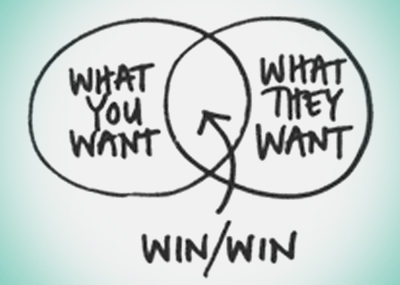
The objective is to attempt to reach an agreement by the end of the day that everyone can live with — less than the plaintiff wants but more than the defense wants to pay.
Sometimes at the end of the day the parties have not reached agreement but the mediator proposes a number for both sides to think about over the next several days. With a “mediator’s proposal,” attorneys for both sides then report to the mediator confidentially whether or not their client accepts that number. Unless both parties agree on the number, neither knows how the other responded to the mediator.
Generally, mediation in injury cases works pretty well if: (a) both parties are looking at the same information; (b) both parties are represented by experienced counsel and listen to their counsel; and (c) both sides are ready to do a deal. This can happen at any time — from before suit is filed until the day before trial. If any of those pieces are missing, the chance of success is less.
Within the next year, I may set up a separate blog to discuss the many nuances of the dispute resolution process, all with a view to shifting into mediation whenever I hang up my cleats as a trial lawyer. That will be the time and place to examine the process in much more detail.
Ken Shigley, a double board certified trial lawyer in Atlanta, Georgia. He has served as president of the State Bar of Georgia, chair of the largest practice area section of the American Association for Justice (Motor Vehicle Collision, Highway & Premises Liability Section), and chair of the Institute for Continuing Legal Education in Georgia board of trustees. He is lead author ofGeorgia Law of Torts: Trial Preparation & Practice (2010-2016) and a chapter author of the 2016 edition of Handling Motor Vehicle Accident Cases, both published by Thomson Reuters. Ken Shigley is a candidate for election to the Georgia Court of Appeals in 2018.