- Free Consultation*: 404-253-7862 Tap Here To Call Us












Venue Options Broaden for Georgia State Tort Claims Cases


When younger lawyers ask me for advice on their cases, among my first questions are, “What is the venue?” and “Who is the judge?” Often the response is, “Uh, I’ll get back to you.”
Facts and law are vitally important. But the identity of the decision makers – judge and jury – are crucial too. While phenomenal verdicts may occur in conservative rural counties in great cases, and the plaintiff will likely recover nothing in a rotten case even in the most generous venue, in average cases the identify of judge and county are crucial. For example, in a fatal log truck crash a couple of years, I worked hard to secure venue in Fulton County (Atlanta) rather than a rural county heavily dependent on the pulpwood industry in which the crash occurred. It made all the difference in the value of the case.
Earlier this year, the Georgia Court of Appeals published an important decision regarding venue in tort cases against state
government. When an action is brought under the Georgia Tort Claims Act against a State government defendant, even when the State entity is not the sole tortfeasor, the mandatory venue provision of O.C.G.A. § 50–21–28 applies. That code section provides that “[a]ll tort actions against the state under this article shall be brought in the state or superior court of the county wherein the loss occurred[.]”
Thus, the determinative factor in venue for personal injury and wrongful death cases against state government in Georgia is determination of where “the loss occurred.”
In Board of Regents of University System of Georgia v. Jordan, 335 Ga.App. 703, 782 S.E.2d 809 (2016), the Court of Appeals of Georgia held:
The term “loss,” as used in the Georgia Tort Claims Act, is defined in OCGA § 50–21–22(3) as “personal injury; disease; death; damage to tangible property, including lost wages and economic loss to the person who suffered the injury, disease, or death; pain and suffering; mental anguish; and any other element of actual damages recoverable in actions for negligence.” (Emphasis supplied.) Had the legislature intended to limit venue for claims under the Georgia Tort Claims Act to the county where the negligent acts or omissions giving rise to the damages occurred, instead of where the “loss” occurred, it could have so provided. When the language of a statute is plain and unambiguous and does not lead to an absurd result, it supplies the sole evidence of legislative intent, and it must not be contravened. See Hall County Bd. of Tax Assessors v. Peachtree Doors, 214 Ga.App. 613, 614, 448 S.E.2d 476 (1994). Upon a plain reading of OCGA §§ 50–21–22(3) and 50–21–28, it is clear that the legislature intended to allow a tort action to be brought against the State in the county where economic loss, pain and suffering, mental anguish, and other elements of actual damages occurred. Since it is undisputed in the cases before us that the plaintiffs incurred losses in DeKalb County, venue is proper in DeKalb County.
In this case, even though the claims arose from medical treatment at a state hospital at Augusta in Richmond County, the plaintiffs had corrective surgeries and long hospitalization in DeKalb County. Because part of “the loss occurred” in DeKalb County – generally a more plaintiff-friendly venue – venue was proper in DeKalb County.
The court appears to have invited the legislature to amend the statute to more narrowly define venue options. However, not all such judicial invitations elicit a response from the General Assembly.
There are many potential ramifications for venue determination in tort claims against state government. One illustration is that if a crash involving a state vehicle causes injury in County #1, the victim is transported to a hospital emergency department in County #2, then is transferred to a tertiary care hospital in County #3, and later dies in County #4, there may be venue under the statute in any of the four counties.
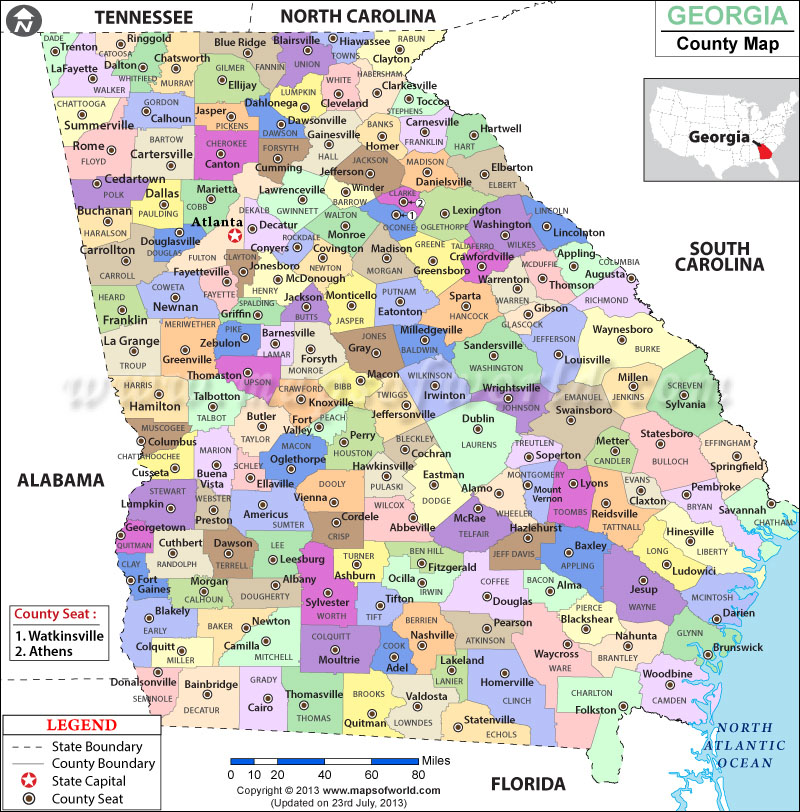
With 159 counties in Georgia, ranging from rural and conservative to liberal and urban, venue options are crucial.
————-
Ken Shigley is a past president of the State Bar of Georgia, past chair of the American Association for Justice Motor Vehicle Collision, Highway and Premises Liability Section, and a board certified civil trial attorney of the National Board of Trial Advocacy. His statewide law practice is based in Atlanta.